


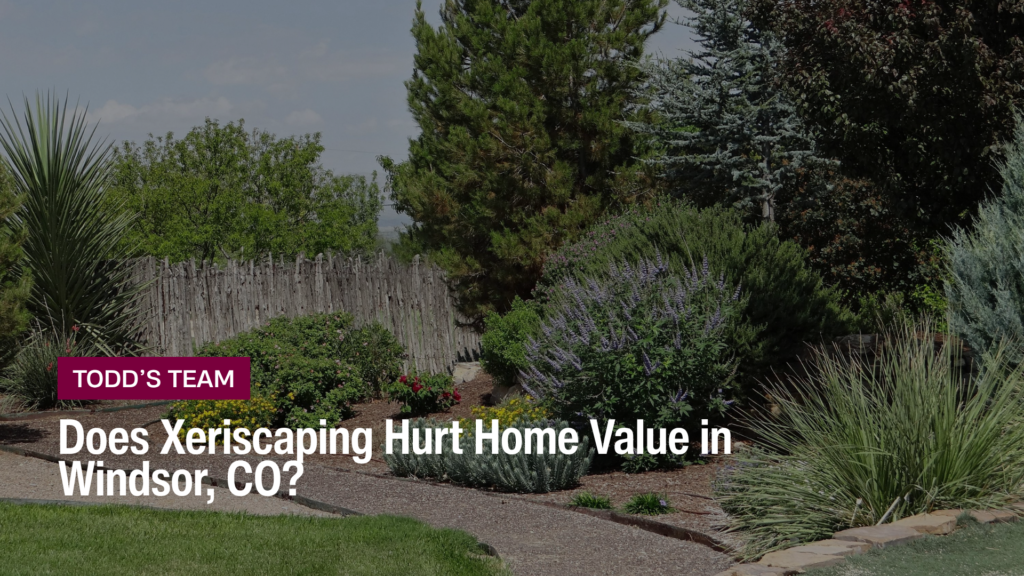
Does xeriscaping hurt home value in Windsor, CO? In most cases, no. A full, well-planted xeriscape reads as neutral to slightly positive to local buyers, a sparse rock yard costs you at the negotiating table, and a conversion done without required covenant approval is the version that can stall a closing. Design quality and paperwork drive the outcome, not the absence of grass.
Plenty of Windsor homeowners pulled the bluegrass and now wonder whether they traded a water bill for a resale problem. Buyers here are far more comfortable with low-water landscaping than a decade ago. What they still dislike is an unfinished yard.
What Windsor Buyers Actually Notice in the Driveway
Noticing a yard, caring about it, and paying for it are three different things. Coverage separates them.
| What Buyers See | Do They Care? | Will They Pay More? | Will They Negotiate? |
|---|---|---|---|
| Dense, layered xeriscape | Yes, favorably | Sometimes | Rarely |
| Mostly rock, few plants | Yes, unfavorably | No | Often |
| Weeds through landscape fabric | Yes, unfavorably | No | Yes, deferred upkeep |
| Healthy irrigated lawn | Yes | Sometimes | Rarely |
A yard reading mostly as plant material lands well. Mostly rock with a few shrubs dropped in does not, at an identical plant count.
Does Xeriscaping Hurt Home Value in Windsor, CO, or Help It?
Water works in your favor. Colorado State University Extension notes in its guidance on retrofitting a yard for low water use that as much as 50 percent of household water goes to the yard and garden, which shows up on a bill buyers read. Windsor has also run a lawn replacement rebate program paying per square foot to convert front-yard turf, signaling the town treats it as an upgrade.
The counterweight is real. Some buyers want fenced grass for a dog or kids, and a full conversion narrows that pool. Usually it changes who shows up rather than what they offer; the offer softens only when the yard looks thin. Fewer irrigation zones is a selling point when a buyer asks who handles the sprinkler blowout before closing.
Your Covenants Matter More Than Your Taste
Colorado law is on your side. Under Senate Bill 23-178 on water-wise landscaping in HOA communities, associations covering single-family detached homes cannot flatly prohibit xeriscape or drought-tolerant landscaping, though limited design review and hardscape limits remain. That is not a blank check. A conversion done without required approval can surface in a buyer’s review, alongside the HOA status letter.
| Yard Condition | What Buyers May Think | What to Evaluate |
|---|---|---|
| Dense plantings, defined beds | Intentional and low upkeep | Photo timing only |
| Mostly rock, thin plants | Cheap fix, more work later | Add plant mass before listing |
| Dormant, cut-back perennials | Dead or neglected | Seasonal photo strategy |
| No approval on file | Possible covenant problem | Getting paperwork in order |
How to Photograph a Xeriscape So It Does Not Read as Neglect
Native plants go brown and get cut back, and buyers scrolling listings cannot tell dormant from dead.
- Shoot exteriors when coverage peaks, if timing allows
- Reshoot rather than reuse peak-season images, a mismatch covered in using June listing photos for an October listing
- Refresh mulch and edge the beds before photos
- Lead with a wide shot showing coverage, not a close-up of rock
Before recommending anything, Todd looks at:
- How competing Windsor listings are landscaped now
- Whether recent comparable sales included converted yards
- Your covenant language and approval records
- Cost of added plant mass against likely return
Frequently Asked Questions
Should we put grass back in before we list?
Almost never. Sod is real money, needs a full season to establish, and reverses something most buyers do not object to.
Filling gaps is cheaper. Shrubs and perennials in thin beds fix the real objection, which is sparseness.
Will an appraiser value our home below the neighbor with a lawn?
Appraisers work from comparable sales, where landscaping lands as a small condition adjustment. A well-kept xeriscape and a well-kept lawn read as similar quality.
Poor condition bites, since it reads as deferred maintenance, which is why keeping receipts for home improvements helps.
Do we have to disclose the conversion?
You disclose what you know about the property’s condition and any association requirements attached to it. If the work was approved, hand over the approval.
If it was not, tell your broker early. Surprises late in a deal cost more leverage than the same issue raised up front.
Will buyers worry it is harder to maintain?
Some will, and the worry is weeds rather than water. Buyers who have watched a rock yard go to seed assume yours will too.
Clean beds at showings answer that better than any listing remark.
Does artificial turf change the answer?
Somewhat. It solves the green-space objection for dog owners, but some buyers dislike it, and rebate programs and covenants do not always treat it like living plant material.
Weigh it as cost versus return, the thinking behind updating dated finishes.
What Xeriscaping Really Does to Your Home Value in Windsor
The tension is not grass versus rock. It is whether the yard looks like a decision or an abandonment. A thoughtfully planted conversion competes fine against the irrigated lawn down the street. A thin one hands a buyer a reason to come in low, and no listing copy undoes that.
Todd is useful before you spend anything. He can walk the yard, compare it against how competing Windsor listings present their landscaping, review your covenant language and approval records, and tell you whether adding plant mass earns its cost or the price should simply reflect the yard as it is. Where covenant or rebate questions turn technical, he can flag what belongs in front of your association or the town.
Often the honest recommendation is to leave the yard alone, shoot it in the right season, and price around it. Sellers keep asking does xeriscaping hurt home value in Windsor, CO, and Todd will give you the real answer for your yard. Call or text 970-286-5390.