



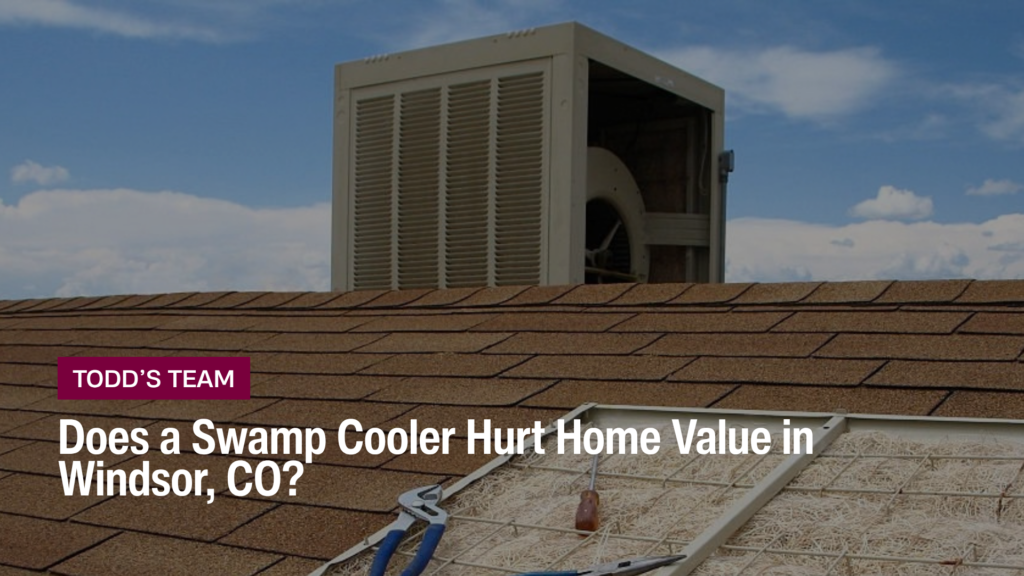
Does a swamp cooler hurt home value in Windsor, CO? Sometimes, and it depends on what competing homes offer. You have four paths: price around the missing central air, offer a cooling credit, install central air before listing, or hand buyers a contractor bid. Comparable sales, not the cooler itself, show which one fits your home.
If buyers keep passing on your Windsor home, the evaporative cooler may be part of the reason, but it is rarely the whole story. Buyers weigh it against price and competing listings. The goal is to find out whether the cooler is the objection or the easiest thing to name.
How Windsor, CO Buyers See Evaporative Coolers
Windsor has a generally dry climate, where swamp coolers work well. According to the Department of Energy’s guide to evaporative coolers, they cost about half as much to install as central air and use about one-quarter as much energy. They also need monthly maintenance during the season and run with windows partly open.
Noticing, caring, and paying are three separate reactions:
| Buyer Reaction | What It Looks Like | Effect on Your Sale |
|---|---|---|
| Notices | Roof unit or ceiling vent | Questions at showings |
| Cares | Asks about humidity and upkeep | Slower decision |
| Pays less | Every comp has central air | Lower offers |
| Negotiates | Inspector notes cooler condition | Repair or credit request |
In an older Windsor neighborhood or on rural Weld County acreage, a working cooler may be ordinary. In a newer subdivision where nearly every competing home has central air, the same cooler reads as a missing feature.
When Does a Swamp Cooler Hurt Home Value in Windsor, CO?
It shows up in price when buyers can see the gap in the comps. If similar homes with central air sold higher and yours is priced as if it had it, buyers do the subtraction for you by skipping the showing.
Check what buyers are telling you first. Reading showing feedback separates a cooling objection from a pricing one. Signs the cooler is the real issue:
- Feedback names cooling, not layout or price
- Competing listings all advertise central air
- Showings drop during warm months
- Buyers ask for a cooling credit in offers
- Price matches comps that had central air
Retrofit Cost Versus Return
A contractor bid on your house is the only reliable number. What drives it:
- Whether you already have forced-air ductwork
- Electrical panel capacity for a condenser
- Furnace age and compatibility
- Home size and layout
- Roof penetration repair after removal
Homes with a forced-air furnace usually have the easiest path. Homes with boiler or baseboard heat have no ducts, and ductless mini split systems are designed for that situation and provide both heating and cooling.
| Seller Choice | Potential Benefit | Potential Drawback |
|---|---|---|
| Price around the gap | No cash or delay | Buyers may still overcorrect |
| Offer a cooling credit | Buyer picks the system | Credit becomes a negotiation |
| Install central air | Matches competing homes | Cost may exceed price gain |
| Provide a contractor bid | Turns a guess into a number | Bid invites a discount request |
Installing makes the most sense when the house is otherwise market-ready, ductwork exists, and comps show a clear central air premium. Pricing around it usually wins when the retrofit is expensive or the house needs other work.
Frequently Asked Questions
Should we replace an old swamp cooler with a new one before listing?
Usually only if the current one doesn’t work. A buyer who wants central air won’t pay more for a newer cooler, but a broken one becomes an inspection item.
Servicing it and replacing the pads often keeps it off the repair list.
Will the buyer’s inspector flag the swamp cooler?
Often, for condition rather than type. Leaks, a rusted pan, or a missing winter cover give buyers a reason to reopen price.
A pre-listing home inspection finds those items first so you can decide what to fix.
Does a swamp cooler lower the appraisal?
Only if comparable sales support an adjustment. The appraiser notes the cooling type and looks for recent closings that show a difference.
If your comps also have coolers, it may not move the number. If they all have central air, a well-priced listing already reflects it.
Can we market the swamp cooler as a feature?
Yes, carefully. Lower operating cost is real, and Colorado State University Extension notes coolers are generally more efficient than air conditioners, though they use more water and need regular maintenance.
Buyers credit documented savings more than adjectives, the same principle behind whether energy efficiency increases home value.
Does it matter if we list in fall or winter?
It softens the objection but doesn’t remove it. Buyers can’t feel the cooler working in January, so the question moves to the inspection and the comps.
A fall listing gives you time to get a bid before summer showings make the point.
Deciding Whether a Swamp Cooler Hurts Home Value in Windsor, CO
A swamp cooler is not a defect, but it can be a gap. Whether that gap costs you depends on what competing homes offer and how your price compares. Spending on central air can help or simply shift money from your pocket into the buyer’s comfort.
Todd can help you see how buyers are reading the cooler, how your cooling setup compares with competing listings, and what an inspector is likely to raise. Questions about system sizing, electrical capacity, or permits belong with a licensed HVAC contractor.
He will compare recent Windsor sales with and without central air, review your showing feedback and days on market, and weigh a contractor bid against the likely price difference. Sometimes the honest answer is to leave the cooler alone and price with the neighborhood. Start with a Windsor home value review.
If you are asking does a swamp cooler hurt home value in Windsor, CO, Todd can answer it for your house. Call or text 970-286-5390.