



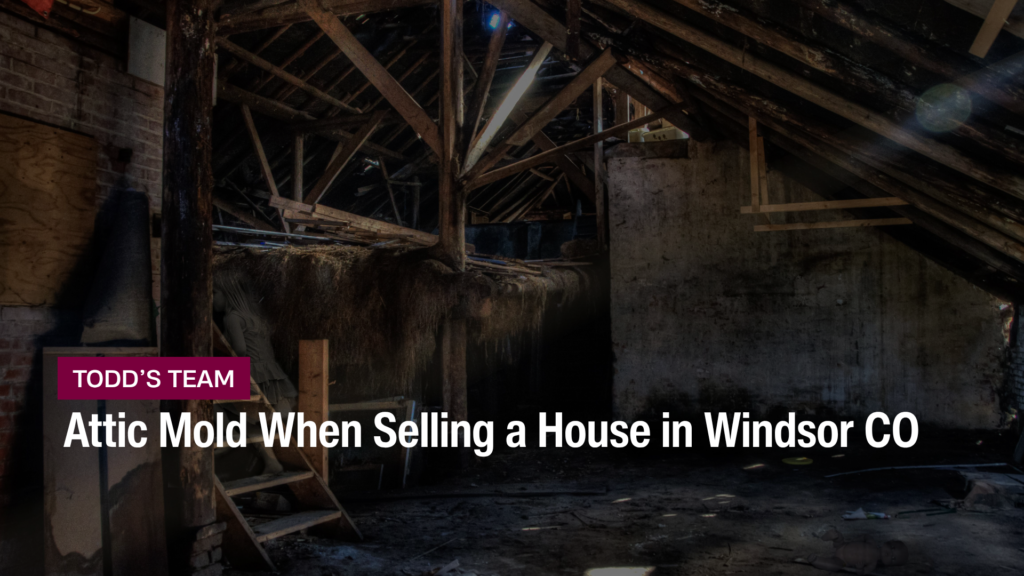
Attic mold when selling a house in Windsor CO doesn’t have to sink your next contract, but it can if the next buyer finds the same unanswered question. Four steps change that: get the attic professionally assessed, fix the moisture source, document clearance, and disclose what you now know. Buyers walk from uncertainty more often than from a resolved, documented issue.
Your buyer’s inspector wrote “possible mold” in the attic, and the buyer terminated. Now you’re wondering whether the next buyer will do the same.
Not necessarily. The first buyer had a deadline, a vague finding, and no answers. The next buyer can have a clear explanation and paperwork.
Why One Line in a Report Ends a Contract
Buyers notice the word mold. They care about whether it’s active, how far it goes, and what it costs. They rarely pay more for a fixed attic, but they use an open question as leverage or an exit.
| What the Next Buyer Sees | Likely Reaction | Effect on Your Sale |
|---|---|---|
| Disclosed, source fixed, clearance on file | Reads the file, moves on | Little leverage |
| Disclosed, unrepaired, priced in | Negotiates | Credit or price talk |
| Cleaned, source not fixed | Inspector finds it again | Distrust, repeat termination |
| Not disclosed, found again | Assumes concealment | Termination and liability risk |
Common Northern Colorado Attic Moisture Sources
Mold needs moisture, and attics in Northern Colorado’s cold, dry winters usually get it from inside the house. Warm, humid household air rises, reaches cold roof sheathing, and condenses. The usual paths:
- Bath fans vented into the attic instead of outdoors, or ducts that came loose
- Insulation pushed against soffit vents, blocking intake airflow
- Air leaks around recessed lights, attic hatches, and plumbing chases
- Furnace humidifiers running high through the winter
- Roof or flashing leaks, sometimes from past hail damage
Where the staining sits points to the source: near a bath fan is a different fix than under a roof penetration.
Assessing Attic Mold When Selling a House in Windsor CO
The EPA’s guide to mold, moisture, and your home is blunt: if you clean up mold but don’t fix the water problem, it will most likely come back. That’s why Todd treats cleaning as the third step, not the first.
- Have a qualified mold assessor confirm what the stain is and how far it extends.
- Have the right trade fix the source: roofer, HVAC tech, or insulation contractor.
- Remediate affected sheathing and framing.
- Get written clearance after the work.
- Update your disclosure before relisting.
A targeted evaluation often beats a second full inspection, a tradeoff covered in getting a pre-listing inspection after a contract falls through.
| Seller Choice | Potential Benefit | Potential Drawback |
|---|---|---|
| Fix, remediate, document | Removes the open question | Upfront cost and time |
| Credit or price around it | No work before closing | Buyers may overestimate cost |
| Sell as-is, disclosed | Fastest to market | Smaller buyer pool, lower offers |
Clearance Documentation and Disclosure
There’s no federal pass or fail number for mold. EPA guidance on mold testing and sampling notes no federal limits exist, but surface sampling by experienced professionals can help show an area was adequately cleaned. Clearance letters, invoices, and before and after photos give the next buyer something to read instead of something to imagine. Todd would also pull the repair receipts buyers actually ask for into one file.
Colorado’s Division of Real Estate explains that the Seller’s Property Disclosure speaks to your current actual knowledge, and changes must be disclosed promptly after discovery. A repaired attic still belongs on the form, with the fix described; see updating your seller disclosure after a failed inspection.
Frequently Asked Questions
Should we just offer the next buyer a credit instead of fixing it?
Sometimes. A credit caps your cost, but buyers tend to imagine attic mold as bigger than a quoted repair, so they may ask for more than the real bill.
Todd weighs it the way sellers weigh radon mitigation during negotiations: a known, quoted cost against the risk of losing another buyer.
What if the “possible mold” turns out to be old staining?
Then get that in writing. Dark sheathing can come from an old leak that dried years ago.
Without a written finding, the next report will likely say “possible mold” again.
Will the next buyer’s inspector look at the attic?
Usually, especially if the listing history shows a contract fell through. Agents ask why.
A short, factual answer backed by the file tends to end the conversation.
Should our listing remarks mention the attic work?
Generally not by name. Remarks sell the home, and the disclosure carries the condition history.
A line offering repair documentation to buyer’s agents signals it was handled.
Should we wait until spring to relist?
Not automatically. Winter is when attic condensation shows up, so a clean attic in January is stronger evidence than one in July.
Waiting makes sense when work isn’t finished. Whether past visitors look at your house again after relisting depends on what visibly changed.
Will Attic Mold Keep Costing You Buyers When Selling a House in Windsor, CO?
Only if the next buyer finds the same open question. Spending on remediation feels like paying twice for a deal that already fell apart. Skipping it often costs more in credits, price, or another termination. The goal is a file that answers the question before an inspector raises it.
Todd can help you understand how an attic mold finding affects pricing, buyer reaction, disclosure, and the relaunch. He isn’t a mold assessor, roofer, or attorney, but he can help identify which questions belong with each.
He would review the prior inspection and objection, the repair scope and bids, comparable Windsor sales with disclosed repairs, and competing listings. Sometimes the answer is fix and document. Sometimes it’s a credit, or pricing around a minor stain and leaving it alone.
Todd can walk you through attic mold when selling a house in Windsor CO. Call or text 970-286-5390.