



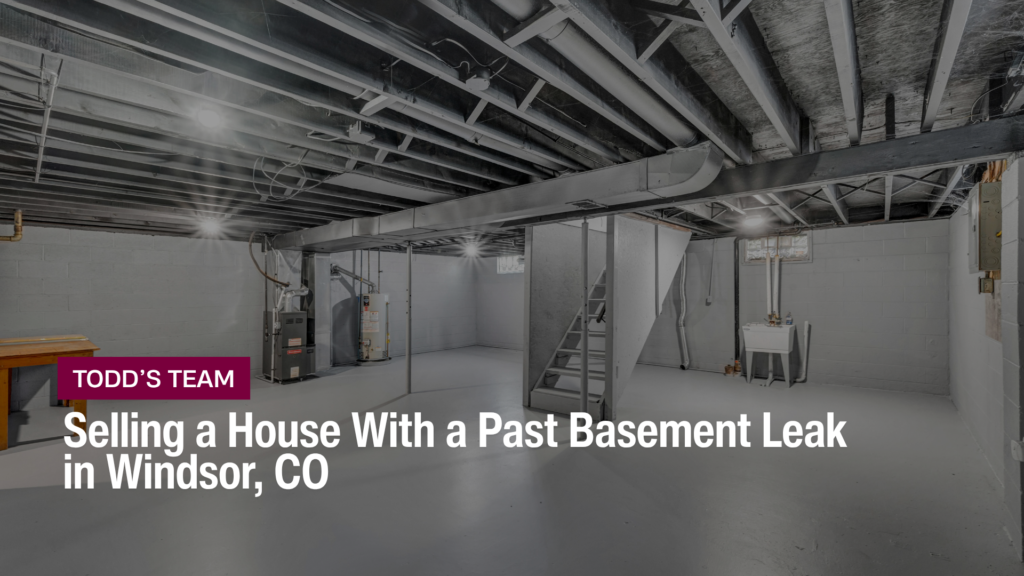
Selling a house with a past basement leak in Windsor, CO works best when the disclosure comes with proof, not just a checked box. You have three tools: a documentation file showing the cause and the fix, current testing that shows the basement is dry today, and presentation that answers the question before a buyer’s agent has to ask. None of them hides the history. They give it an ending.
You disclosed a leak that was fixed years ago, and buyers cool off the moment they read it. A single line about past water hands buyers a question with no answer, and most won’t call to ask.
Why a Fixed Leak Still Reads Like a Risk
Colorado’s Seller’s Property Disclosure is completed to your current actual knowledge as the Division of Real Estate explains it, and the form separates conditions that ever existed from those that exist now. A leak that ended years ago can still belong on the form.
Buyers notice the checkbox. They care whether water could come back. They pay full price when the answer is documented, and they use any gap as inspection leverage.
| What the Disclosure Shows | What Buyers May Think | What Todd Would Evaluate |
|---|---|---|
| Past leak, no details | Cause unknown, could return | Whether records exist |
| Leak repaired, date listed | Who fixed it? | Invoice and contractor |
| Repair plus warranty | Someone stands behind it | Whether it transfers |
| Finished basement over old leak | What’s behind the drywall? | Moisture readings, permits |
The Colorado Geological Survey’s guide to swelling soils for Colorado homeowners calls swelling soil a common Colorado hazard, so many Windsor buyers hear “water” and think “foundation.”
Building the File for Selling a House With a Past Basement Leak in Windsor
Todd would build a short, dated account in this order:
- Write a one-paragraph summary of the date, the source, and the fix.
- Pull invoices, warranties, and any permits for the repair.
- Add dated before-and-after photos.
- Note heavy storms the basement has handled dry since.
- Attach the file to the disclosure so agents see both together.
Bank statements and contractor emails can fill gaps. Todd’s guide to which home improvement records buyers ask for covers what carries weight.
Testing That Shows the Basement Is Dry Today
Paperwork proves the repair. Current findings prove it held:
- Moisture readings on walls and slab near the old leak
- A grading and gutter check, since soil should slope away from the house
- A sump pump test, if the home has one
- A sewer scope, if the water came from a backup
- An engineer’s opinion on any foundation cracks near the old leak
The EPA’s guide to mold, moisture, and your home states that moisture control is the key to mold control. So Todd starts with moisture readings, not mold sampling.
Presentation Choices That Help Without Minimizing
| Presentation Choice | Potential Benefit | Potential Drawback |
|---|---|---|
| Repair file attached to disclosure | Answers questions early | Draws slightly more attention |
| Brief note in agent remarks | Agents expect the file | Easy to overstate |
| Unfinished walls left visible | Nothing looks hidden | Less finished feel |
| Nothing beyond the checkbox | No extra effort | Buyers fill in the blanks |
Keep public wording factual. “Dry basement guaranteed” invites the next inspector to prove otherwise. Todd’s breakdown of how buyers read MLS public remarks shows why specifics work better.
Frequently Asked Questions
Can we stop disclosing it since it was fixed so long ago?
Usually not. The form asks about some conditions that ever existed, and a known past leak is the kind of fact a reasonable buyer would weigh. Leaving it off trades a pricing conversation now for a liability conversation later.
When an item is unclear, Todd can help you frame the question for a real estate attorney.
Should we lower the price because of the leak history?
Not automatically. A well-documented, long-resolved leak often prices close to comparable homes because the uncertainty is gone. A discount makes more sense when the file is thin or a finished basement hides the old area.
Todd checks comparable Windsor sales and active competition first.
What if a buyer’s inspector flags old water staining?
Expect it. Inspectors can’t date staining. Your file is the answer: a dated repair, current dry readings, and no recurrence.
If a buyer still terminates, Todd’s guide to updating your disclosure after a failed inspection covers what changes next.
Should we get our own inspection before relisting?
A targeted one is often the better spend. A full report can surface unrelated items you then disclose. A moisture-focused evaluation answers the actual question.
Todd’s take on whether a pre-listing home inspection makes sense covers when the broader report pays off.
Will our finished basement make buyers more nervous?
Sometimes. Finished walls hide what buyers want to see. Moisture readings at the base of the drywall and photos from before the finish help.
If the finish went in after the repair, say so. It shows you trusted the fix enough to invest in the space.
Can Selling a House With a Past Basement Leak in Windsor, CO Still Go Well?
It can, but not by hoping buyers skim the checkbox. Disclosing was the honest move. The gap is that buyers got the history without the ending, and closing that gap usually costs less than a price cut.
Todd can help you see how your disclosure reads to Windsor buyer’s agents, which records and tests close the question fastest, and how to word the history accurately. He isn’t an engineer, inspector, or attorney, so he would help you frame questions for a waterproofing contractor, engineer, or attorney when needed.
He would also review your showing feedback, recent Windsor sales with disclosed water history, and your competition. Sometimes the answer is a better file at the same price. And sometimes the honest answer is to leave a dry, documented basement alone and stop apologizing for it.
Todd can help you build the file for selling a house with a past basement leak in Windsor, CO. Call or text 970-286-5390.