



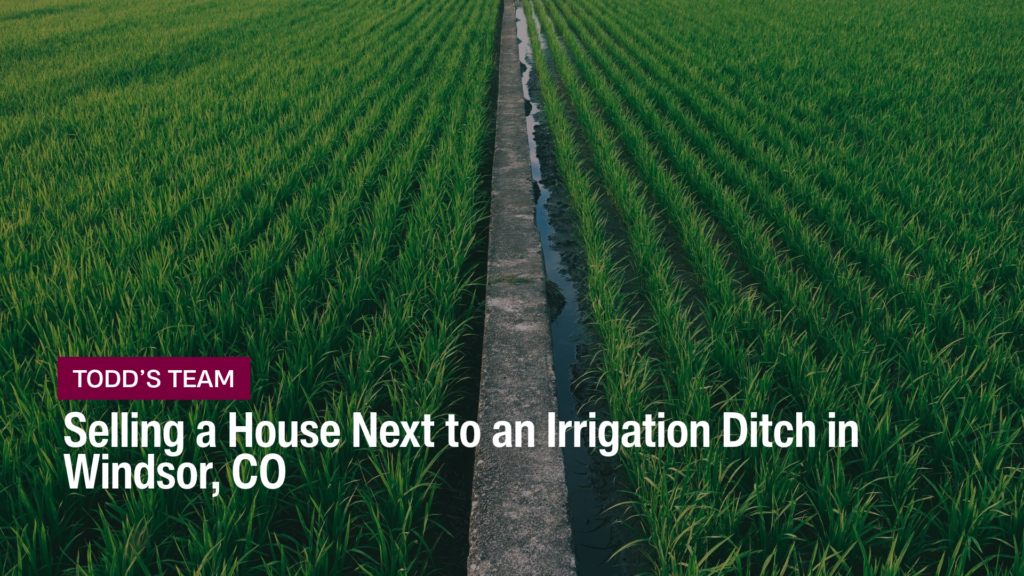
Selling a house next to an irrigation ditch in Windsor, CO is rarely the only reason buyers pass. They usually react to one of three things: safety and upkeep worries, an easement that shrinks the usable yard, or a price that ignores both. The fix follows the same three paths: answer the questions in the listing, document what the ditch company allows, and price against sales that share the exposure.
Many Windsor neighborhoods grew up around old farm ditches, and buyers from out of state may not have lived beside one. If buyers tour and still write offers elsewhere, the reasons behind plenty of showings but no offers may matter more than the ditch.
Why Buyers Pass When Selling a House Next to an Irrigation Ditch in Windsor
Buyers notice the ditch, care about some of what it implies, and pay less only for the parts nobody explained.
| Buyer Concern | What Buyers Think | What Answers It |
|---|---|---|
| Kids and pets | Is it deep? | Depth, flow season, fencing |
| Mosquitoes | Will summer be miserable? | Your honest experience |
| Maintenance crews | Who drives through my yard? | Access history |
| Seepage | Will the basement get wet? | Dry record, grading |
| Lost yard | What can I build? | The easement, in writing |
The upside is real too: mature trees, birds, and no rear neighbor. Buyers who value that will pay for it, so lead with it in photos.
What the Ditch Company’s Easement Means for Fences and Sheds
You likely own the ground under the ditch, but the ditch company holds rights to use it. The City of Boulder’s irrigation ditch FAQ for homeowners explains that many Colorado ditch easements are prescriptive, set by long use rather than a recorded document, and sized to what is reasonable to maintain the ditch, including heavy equipment on the bank.
The same guide notes that building or planting inside the easement typically needs the company’s written approval. A shed, fence, or patio near the bank becomes a buyer question. Gather these before you list:
- The plat and title commitment
- Any written approval from the ditch company
- Your ILC or survey showing structures near the bank
- When crews last cleaned the ditch
A fence along the bank raises the same paperwork questions as a fence encroachment when selling in Windsor, with one more party who can ask you to move it.
How to Describe and Disclose the Ditch
Colorado’s Seller’s Property Disclosure form asks about encroachments, unrecorded easements, flooding, and water intrusion, and requires disclosing known adverse material facts even without a matching line item.
Disclosure is not an apology. Todd builds the listing in this order:
- Name the ditch in the remarks, so it reads as a feature.
- Photograph the backyard honestly, bank included.
- Answer flow season, fencing, and access on a one-page handout.
- Attach any ditch company letter to the disclosures.
Pricing Around the Ditch Honestly
Whether the ditch costs you money depends on your comps. If homes on the same bank sold close to interior lots, it is not a discount. If they lagged, ignoring it adds days on market.
| Seller Choice | Potential Benefit | Potential Drawback |
|---|---|---|
| Price with interior lots | Keeps equity | Slow if ditch comps lagged |
| Price against ditch comps | Fits buyer expectations | Concedes value early |
| Offer a fence credit | Answers safety worry | Buyer may still want price |
| Wait for spring | Green bank photographs well | Flowing water draws questions |
It works the way a neighbor’s house can affect your home value: it costs showings and leverage before appraised value.
Frequently Asked Questions
Who do I call about the ditch behind my house?
Start with the ditch company, not the town. Larimer County’s directory of irrigation ditch companies lists Northern Colorado operators, including the Windsor Reservoir and Canal Co.
One call about access and building rules answers buyers before the inspection negotiation does.
Does living next to the ditch mean I get the water?
No. Using ditch water depends on owning or leasing shares, not on living beside the ditch. A lot can back to a ditch and carry no shares.
If you hold shares, read how irrigation ditch shares transfer with the property before promising water.
The ditch seeps into our yard in summer. Do we have to disclose that?
If you know about water intrusion or drainage problems, yes. A dry August inspection will not hide a wet June.
Seepage is generally the landowner’s to manage. A drainage fix with receipts often reassures buyers more than a price cut.
Should we put up a fence along the ditch before listing?
Sometimes. A fence answers the safety worry for families with kids and dogs.
Ask the ditch company first. A fence inside the easement without approval turns a selling point into an objection.
Will the appraiser mark us down for the ditch?
Only if the comps support it. Many ditch-side lots sell in line with their neighbors.
The bigger risk is the buyer’s offer, which is why the listing should answer the ditch first.
Is the Ditch Why Buyers Pass? Selling a House Next to an Irrigation Ditch in Windsor, CO
What you control is whether buyers meet it in the listing or at the back fence. Sometimes it costs you offers. Often it takes the blame for price.
Todd can help you sort out which. He can review how the ditch reads in your listing, what the easement means for your fence and outbuildings, and which questions belong with the ditch company, a title officer, or a real estate attorney.
From there it is evidence. Todd will compare ditch-side and interior sales, review showing activity, and weigh a fence credit or price change against what it returns. Sometimes the honest answer is to leave the bank alone, describe it well, and wait for green-season photos. Start with a current read on what your Windsor home is worth. For advice on selling a house next to an irrigation ditch in Windsor, CO, talk with Todd. Call or text 970-286-5390.